A letter to the mathematical community, to be published in the Notices of the AMS
With the advent of the Large Language Model, mathematicians may engage in Socratic dialogue with the entire mathematical literature. We may largely bypass the irritations of computer programming in designing experiments. We may even hope to transcend the aggressive specialization that has emerged in our subject since the beginning of the last century. And, not least, we now possess an increasingly adept mechanical assistant for reasoning, proof, and verification. The emergence of such a remarkable new tool, during such a fertile period of human talent, could lead to an era of expansion – with a more ambitious vision for mathematics and an improved concept of what the mathematical literature should be.
But as machines resolve conjectures on which careers were staked, some in the field are reacting with alarm. And the panic reveals a deeper identity crisis: What even is mathematics? Shall we view it as the mechanical derivation of consequences from axioms? If so, shall we amass a library of billions of theorems, and reduce the discipline to finding post hoc applications and explanations of this digital exhaust?
No serious mathematician believes this view of the subject is correct. Whatever mathematics truly is, we are currently living in a golden age of conceptual progress, taking place within traditional academic publishing. We participate in a multi-generational flow of ideas in multiple sub-fields, many of which serve other branches of science and some of which serve mathematics itself. We maintain the literature as a running repository of the more interesting discoveries we find along the way. And, crucially, we provide a systematic approach to education in mathematics for a wide variety of students, as well as a bespoke apprenticeship for those interested in research.
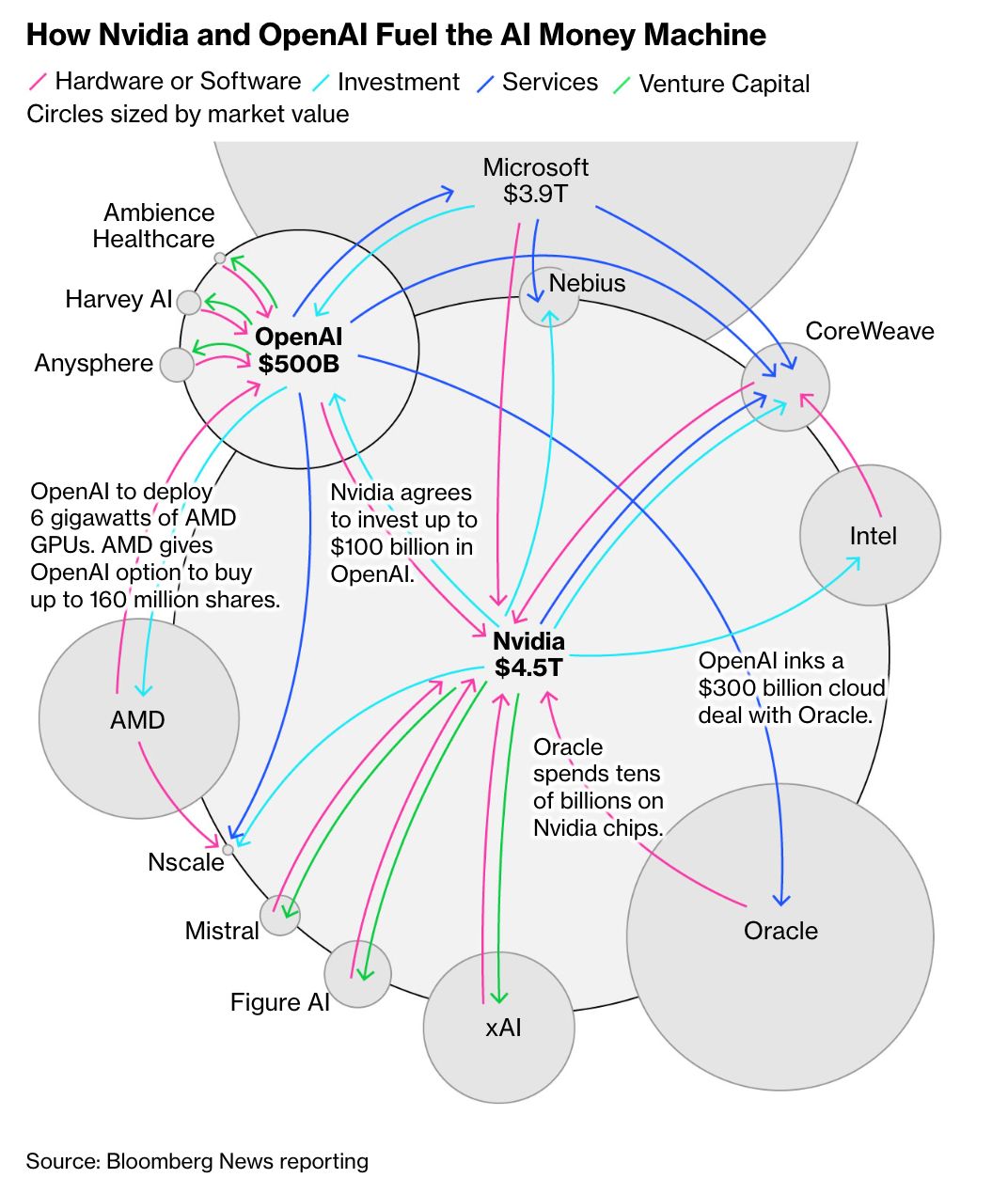
Even in its current form, the LLM may assist us in all of these efforts, but only if we are able to overcome the challenges the technology poses as it undermines our approach to teaching, evaluation, publishing, and personal autonomy – to say nothing of the predatory stance taken by the top US-based AI labs towards the existing ecosystem of institutions that gave rise to the LLM in the first place. Unlike previous government-sponsored megaprojects like Bell Labs, the Manhattan Project, the Apollo Program and the Human Genome Project, the current AI cartel is not content with funding private science or contributing to the public sector; their objective seems to be the privatization of all scientific inquiry. These actors operate under the delusion that mathematical research can be repackaged as “science-as-a-service” fueled by monthly subscriptions, advertising revenue, and proprietary software running on vast computer clusters.
The exploitation of mathematics by commercial AI labs comes as no surprise. Mathematics enables the creation of powerful controllable systems across diverse domains—including cryptography, weapons technology, financial arbitrage, and advanced algorithms such as the LLM. The subject has a reputation for unassailable precision and verifiable correctness. Thus, the use of funding by large companies and venture capitalists to pull mathematicians into their orbit for private gain. The framing by the AI companies of the LLM as a potentially dangerous quasi-sentient entity, besides being arguably true, is a useful marketing strategy, an attempt to gather for themselves the social and economic capital that is usually reserved for basic scientific research. The problem of “alignment” or “AI safety” is not one that we should expect to be solved by companies that are essentially military cyberwarfare facilities built by unlimited debt financing.
In 1970, Alexander Grothendieck resigned his professorship at the IHES when he discovered that 5% of its operating funds came from the French Ministry of Defence. That same year, he founded the group Survivre et Vivre, whose purpose was, as he described it:
…the struggle for the survival of the human species, and even of life itself, threatened by the growing ecological imbalance caused by the indiscriminate use of science and technology and by suicidal social mechanisms, and also threatened by conflicts related to the proliferation of military devices and arms industries.
How would he and his colleagues react to the news that some of our mathematical leaders, beneficiaries of immense public investment, are declaring the end of mathematics as we know it and securing sinecures in the military-industrial complex?
During this period of change, we must hope that mathematicians refuse to surrender their independence while navigating the promise of AI – a key point of the Leiden declaration. As we wait for the conglomerates to be broken up, regulated or partially nationalized by our governments, an exchange of ideas may be possible without compromising academic freedom, whether in the form of public-private partnerships housed within universities, or consulting work with non-perpetual nondisclosure agreements. We must advocate for models and their training data to be open source, and demand that “compute” not be concentrated in private hands by socially dangerous methods of financing, in addition to being environmentally sustainable. And, finally, we must encourage the current generation of students to see through the transparent misconception that a new tool, however powerful, should represent a threat to the mathematical pursuit. We should not underestimate students’ abilities to absorb and leverage technological advancements to obtain ever greater insights that will push mathematics forward. Universities would do well to fill their chairs with such resilient, post-AI mathematicians.